Structural Drying & Dehumidification in West Chester, PA
Removing the water is only half the job. West Chester's median build year is 1954, so the drying team sets air movers and dehumidifiers by the readings and keeps measuring until every material is dry.
(888) 557-1733Call about drying a wet structureLGR dehumidifiers Daily psychrometric logs Wall cavity drying
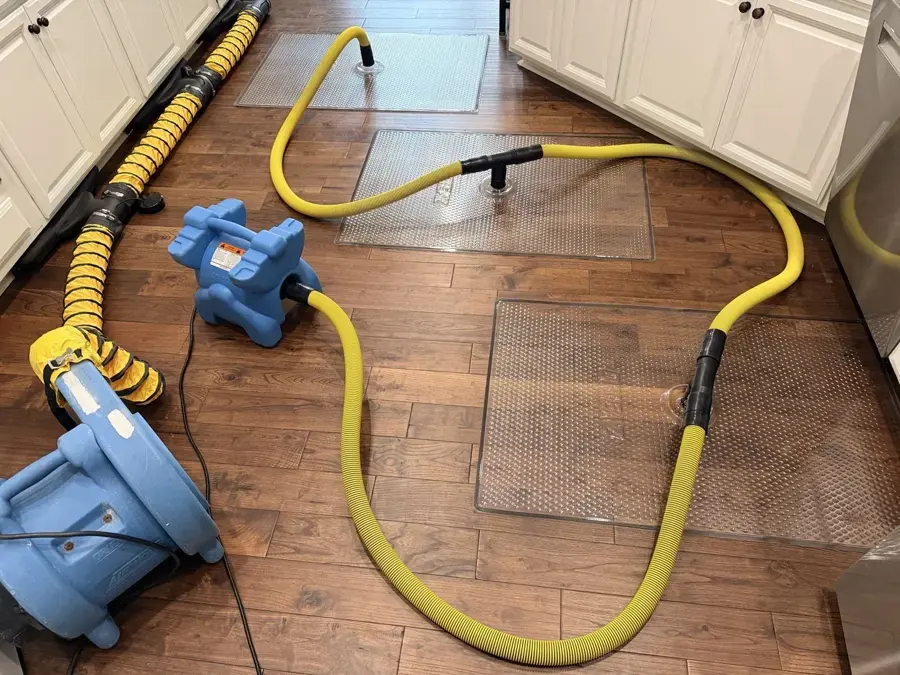
First steps for structural drying and dehumidification in West Chester
- 1Turn off the HVAC
Switch off the HVAC if water reached vents, so wet air and debris do not spread.
- 2Open the space
Open interior doors and closets, and lift rugs and curtains, so air can move.
- 3Leave the equipment
Do not unplug or move equipment once it is set, since placement follows the moisture map.
- 4Report new damp spots
Tell the drying team about new stains, odors or damp baseboards.
How structural drying and dehumidification is handled in West Chester, PA
- 1
Read the building
The tech meters walls, floors and ceilings, notes the materials and builds a moisture map.
- 2
Place the equipment
Air movers, dehumidifiers and cavity dryers are set by room size and material, with the HVAC off.
- 3
Measure every day
Readings are taken at the same marked spots each visit, and equipment shifts as sections dry.
- 4
Declare it dry
Once every material meets its dry reference, equipment comes out and the logs are handed over.
What does structural drying and dehumidification cost in West Chester, PA?
Cost follows rooms and materials. A single room runs $1,000 to $2,500, several rooms $2,500 to $6,000, and dense materials like hardwood or plaster $6,000 to $12,000 or more.
One room, light wetting
$1,000 to $2,500
- Air movers and a dehumidifier
- Readings each visit
- Removed once dry
Several rooms or a basement
$2,500 to $6,000
- Several LGR units running
- Walls dried through small holes
- Humidity and temperature logs
Hardwood, plaster, stone
$6,000 to $12,000+
- Desiccant units for dense material
- Mat systems on hardwood
- Long-run moisture tracking
These ranges are typical, not a quote. The water category, the wet square footage, the material class and how soon drying began move the number most. The water damage cost calculator gives a planning figure.
Drying is a measured process, not a matter of leaving fans on. Water moves into framing, subfloors and wall cavities, and surfaces can look dry while the material behind them is still wet. The drying team reads each material against its dry reference, sets equipment to match, and adjusts every day until the numbers agree.
What the equipment does
- Air movers push dry air across wet surfaces to release moisture
- LGR dehumidifiers pull that moisture out of the air and drain it away
- Cavity dryers push warm air into walls through small holes, so drywall can stay
- Desiccant units handle cold or dense conditions where standard units slow down
An older housing stock
West Chester's median home was built in 1954, and 3,447 of its 8,087 homes date to 1939 or earlier. Construction materials vary from house to house, so the tech identifies what is wet, such as wood, plaster or masonry, before choosing equipment. Dense materials dry slowly and can need extended monitoring, which is why the readings, not a calendar, decide when the job is finished.
How the job is declared dry
Daily psychrometric logs record temperature, humidity and moisture content, and the same spots are measured each visit so the trend is clear. Equipment leaves only when the wettest materials reach their dry reference. A job that is declared dry early comes back as swelling, odor or a failed repair. For the first step before drying, see water extraction, or try the drying time estimator for a rough range.
Structural Drying and Dehumidification across West Chester and nearby towns
Drying setups run in homes, apartments and shops across Downtown West Chester, North Hill, the east side and the university area, covering ZIP codes 19380, 19382 and 19383.
The same service nearby: structural drying & dehumidification in Downingtown, Coatesville, Media.
Water damage restoration in West Chester Every town coveredRelated water damage services in West Chester
 Water Extraction & Removal in West ChesterGo to this service
 Burst Pipe Water Damage in West ChesterGo to this service
 Flood Cleanup in West ChesterGo to this service
Structural Drying & Dehumidification in DowningtownGo to this service
Water damage restoration in West ChesterSee this town
Water damage cost calculatorRun the numbers
Flood Cleanup in West ChesterGo to this service
Structural Drying & Dehumidification in DowningtownGo to this service
Water damage restoration in West ChesterSee this town
Water damage cost calculatorRun the numbers
Structural Drying and Dehumidification questions in West Chester, PA
How long do the dehumidifiers need to run?
Until the readings say the structure is dry, not until a set number of days passes. Dense materials like hardwood and plaster take longer than drywall and carpet.
Why is the equipment so loud?
Air movers and dehumidifiers move a lot of air, and the noise means moisture is leaving the structure. It ends when the logs show the job is done.
Will the electric bill go up?
Yes, equipment draws power for the whole drying period. The cost depends on how many units run, and some policies include the added electricity in the claim.
Can hardwood floors be saved?
Often, if the drying starts early. Mat systems pull moisture from the boards, and the tech watches for cupping, since cupped floors may flatten again as they dry.
Does drying prevent mold?
It is the main defense. Mold can start in 24 to 48 hours on damp materials, and bringing them to dry standard quickly removes the moisture it needs.
Can drying start before the cleanup?
For clean water, yes. When the water was contaminated, cleaning and sanitizing come first, because drying equipment would spread what the water left behind.
Dry surfaces can hide wet framing
Call to describe the water, the rooms and the materials involved. The crew will explain the equipment plan and how the readings are tracked.