Structural Drying & Dehumidification in Pottstown, PA
Wet framing, subfloors and masonry keep releasing moisture long after the water is gone. The drying team places air movers and dehumidifiers, takes daily readings and stops only when materials match a dry reference.
(888) 557-1733Call a Pottstown drying crewAir movers and dehumidifiers Daily psychrometric logs Cavity and floor drying
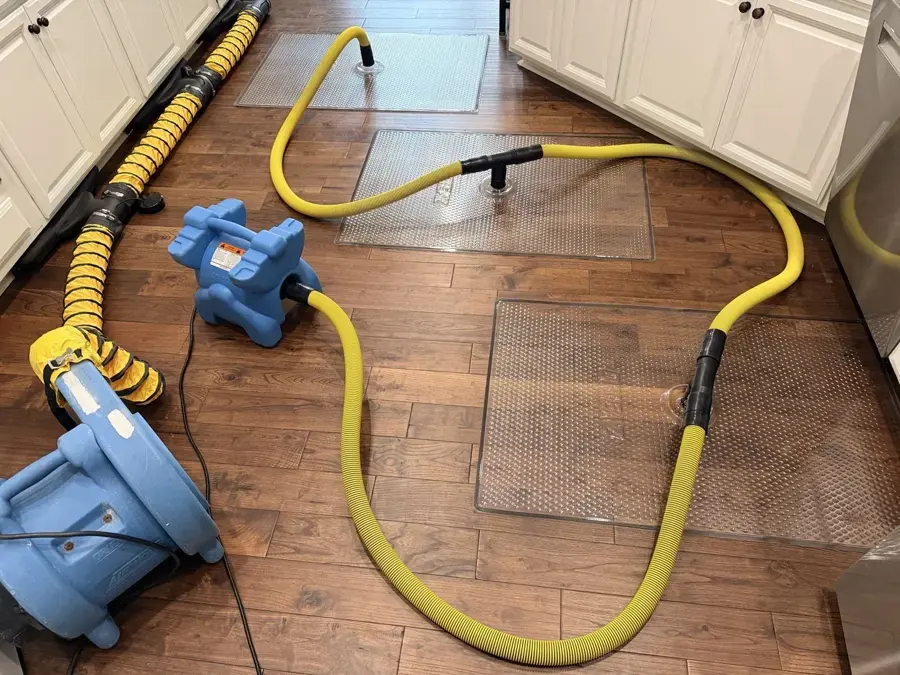
First steps for structural drying and dehumidification in Pottstown
- 1Hold steady temperature
Keep the building at a normal temperature and avoid aiming space heaters at wet materials.
- 2Close the building up
Leave windows closed once drying starts so the dehumidifiers work on the room's air, not outdoor humidity.
- 3Leave the equipment alone
Do not move, unplug or switch off drying equipment, because placement follows the moisture map.
- 4Report new signs
Tell the crew about musty smells or wet spots that return so they can recheck readings.
How structural drying and dehumidification is handled in Pottstown, PA
- 1
Take starting readings
Moisture meters, a thermal camera and a hygrometer record the starting numbers for every wet material.
- 2
Place the equipment
Air movers and dehumidifiers go where the moisture map says, with cavity or floor systems added.
- 3
Check and adjust
Each visit the crew rereads the meters, logs humidity and temperature and moves equipment as needed.
- 4
Confirm and remove
Once materials match their dry reference, the equipment comes out and the final log goes to the owner.
What does structural drying and dehumidification cost in Pottstown, PA?
A single room usually costs $1,000 to $2,500 to dry, several rooms or a basement $2,500 to $6,000, and dense Class 4 materials like hardwood, plaster and stone $6,000 to $12,000+.
One room, light materials
$1,000 to $2,500
- Air movers, one dehumidifier
- Readings at each visit
- Equipment removed when dry
Several rooms or basement
$2,500 to $6,000
- More dehumidifiers, larger area
- Drying inside wall cavities
- Logged temperature and humidity
Dense Class 4 materials
$6,000 to $12,000+
- Desiccant units, stubborn moisture
- Mats under hardwood floors
- Longer, closer monitoring
These ranges are typical, not a quote. The water category, the wet square footage, the material class and how soon drying began move the number most. The water damage cost calculator gives a planning figure.
The July 11, 2019 flash flood put water into 30-40 Pottstown homes, some on the first floor, and the same pattern repeats after every large loss: the visible water leaves, but moisture stays in framing, subfloors and masonry. Drying has to reach those hidden materials. Equipment placement follows the moisture map, not a fixed formula.
How the equipment works together
- Air movers push dry air across wet surfaces so moisture leaves the material.
- LGR dehumidifiers pull that moisture out of the air and drain it away.
- Desiccant units handle dense, cold or very wet materials where standard units fall short.
- Floor mats and wall cavity systems pull moisture from hardwood and framing directly.
Why older buildings need extra care
In the Old Pottstown Historic District, the late 1800s industrial boom left a strong Victorian imprint, and older buildings from that era can include dense plaster, thick timber and stone that give up water slowly. These are Class 4 materials, so drying runs longer and is checked more often. Hardwood floors may need drying mats, and plaster walls may need slow, steady airflow.
Done means dry, not timed
A dry-looking room can still hold wet framing, so the crew compares each material with a dry reference reading and keeps equipment running until the numbers match. Daily psychrometric logs record temperature, humidity and moisture content, so the drying trend is visible to the owner and the insurer. The drying time estimator gives a rough range, and water extraction comes before drying begins.
Structural Drying and Dehumidification across Pottstown and nearby towns
Structural drying runs across Pottstown, from the Old Pottstown Historic District and Downtown to the neighborhoods of Chicken Hill and the East End, in ZIP codes 19464 and 19465.
The same service nearby: structural drying & dehumidification in Downingtown, Phoenixville, West Chester.
Water damage restoration in Pottstown Every town coveredRelated water damage services in Pottstown
 Water Extraction & Removal in PottstownGo to this service
 Flood Cleanup in PottstownGo to this service
 Burst Pipe Water Damage in PottstownGo to this service
Structural Drying & Dehumidification in DowningtownGo to this service
Water damage restoration in PottstownSee this town
Water damage cost calculatorRun the numbers
Burst Pipe Water Damage in PottstownGo to this service
Structural Drying & Dehumidification in DowningtownGo to this service
Water damage restoration in PottstownSee this town
Water damage cost calculatorRun the numbers
Structural Drying and Dehumidification questions in Pottstown, PA
How long will the equipment run?
It runs until readings match a dry reference, which depends on the materials, the water category and the humidity. Light finishes dry sooner than hardwood, plaster or stone.
Why is the equipment so loud and warm?
Air movers and dehumidifiers run continuously, and dehumidifiers release warm, dry air. That warmth helps moisture leave the materials, so the equipment should stay on.
Can a dry-feeling room still be wet inside?
Yes. Framing, subfloors and the back of drywall can hold water while the surface feels dry, which is why meters and a thermal camera, not touch, decide when drying is done.
What are Class 1 through Class 4 drying?
The classes describe how much water a material can hold and release. Class 1 is the least, Class 2 and 3 involve carpet, walls or ceilings, and Class 4 covers dense materials like hardwood, plaster and stone.
Do older buildings take longer to dry?
Often. Plaster, thick timber and stone hold water longer than modern drywall, so older structures can need desiccant dehumidifiers, floor mats and closer monitoring.
Does the drying record help with a claim?
Yes. Daily temperature, humidity and moisture logs show what was wet, how long equipment ran and when each material reached a dry reading, which gives an adjuster a clear record.
Dry means measured, not just dry to the touch
Pottstown drying crews map the moisture, place the equipment and log each visit, so the owner and insurer see when every material reached a dry reading.