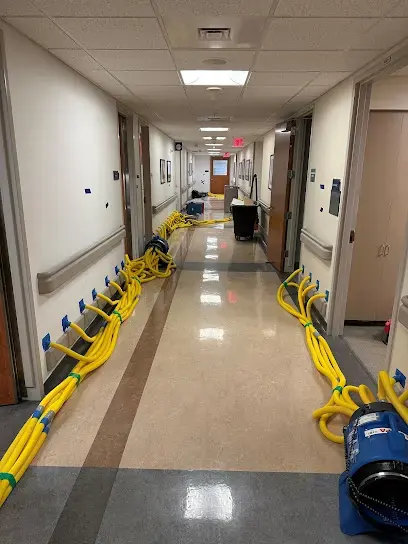
Downtown West Chester packs restaurants, nightlife, hotels and events into a district listed on the National Register of Historic Places in 1985. A water loss in one suite can reach the one next door before anyone notices.
Key takeaways
- Downtown buildings share walls, floors and ceilings, so a leak in one suite often reaches another.
- The first calls are to stop the source and to document the loss before stock and fixtures are moved.
- Phased drying lets part of a space reopen while equipment works in another part.
- Kitchens and bathrooms need extra care when floor drains or sewage are involved.
- Tenants and landlords should agree early on who contacts which insurer.
Why downtown buildings dry differently
The Downtown West Chester Historic District was listed in 1985, and the official downtown visitor website lists hotels, restaurants, nightlife and events. The core around Gay Street and High Street puts many uses on a few blocks.
County government offices, including the courthouse, are in the borough too, along with West Chester University, which had 17,417 students in fall 2025, and Penn Medicine Chester County Hospital on East Marshall Street. A business in this area has neighbors on every side.
In older buildings, water travels through floor framing, plaster and shared walls in ways a newer building would not. A small leak above a ceiling can appear as a stain in the next suite.
The first day for an owner or manager
An owner carries two clocks: the drying clock and the reopening clock. Planning for both on day one keeps the second from running longer than it has to.
A downtown loss rarely stays inside one lease. Water follows framing, pipes and floors, and it does not stop at a property boundary.
Once the source is stopped, water extraction in West Chester can begin while the records are still being gathered. The first-day steps are short:
- Stop the source: close the supply valve, shut the fixture or stop the appliance.
- Keep staff and customers out of wet areas, and cut power to those areas if it is safe.
- Photograph and record video of the loss before stock, furniture or ceiling tiles are moved.
- List damaged inventory with counts and values.
- Tell the landlord or property manager and the insurer.
Restaurants and bars
Food service adds a cleaning step that an office does not need.
Kitchens and floor drains
Kitchen floor drains can back up with grease and food waste, which turns a leak into a gray water or sewage problem. Drain water is not clean, so the surfaces it touched are cleaned and sanitized and porous material it soaked is removed.
A kitchen can only reopen when it is clean and dry, so the drying plan and the cleaning plan run together.
Ice machines, dishwashers and grease traps
Commercial kitchens add water sources that homes do not have: ice machines, dishwashers, prep sinks and grease interceptors.
A leak from any of them is usually gray water, and the cleanup treats it that way.
Dining rooms and bars
Wet flooring under tables, bar rails and booths is dried from above and sometimes from below, with floor coverings lifted where water is trapped.
Upholstered seating and soft materials that soaked up water are usually removed rather than dried.
Shops and offices
Paper, cardboard and fabric stock wicks water quickly. Move what is dry first, and photograph what is not.
Wall outlets and power strips in wet rooms stay off until they have been checked.
Documents that cannot be replaced, such as signed contracts or original drawings, go to a dry place first.
Customers matter too. Wet floors need signs and barriers, and a damp entry can be a slip hazard before the drying team has even started.
- Lift stock off the floor onto plastic or metal shelving.
- Move paper records to a dry room.
- Keep wet computers and equipment unplugged until they are checked.
- Keep a list of what was moved and where it went.
Phased drying: reopening part of the space
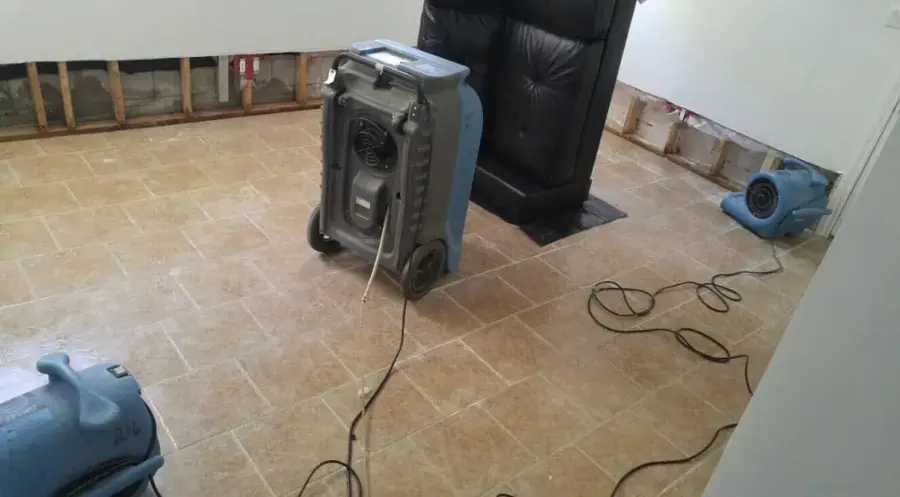
Phased drying splits a space into zones. The drying team seals the wet zone with plastic barriers, runs equipment there and returns dry zones to use.
Moisture readings steer each phase, and a zone reopens when its walls and floor match dry material.
A phase plan lists each zone, what equipment runs there and what reading ends the phase, so the owner knows what to expect.
Where a space stays occupied, air scrubbers with HEPA filters can run beside the drying equipment to keep dust and odor down.
Noise and humidity matter in a shop or a dining room, so equipment placement is planned around opening hours. Both commercial water damage restoration in West Chester and structural drying in West Chester use this phased method.
Shared walls, landlords and neighbors
A leak above a downtown shop can come from a tenant upstairs, a roof or a shared pipe, and the right call depends on the source. Finding the source first prevents arguments later.
A landlord and a tenant usually carry different insurance with different jobs. Reading the lease and calling both insurers early prevents delays.
A short written note to neighboring suites explains what is happening, who to contact and when access is needed. It costs little and prevents friction.
These questions settle most disputes before they start:
- Ask who controls the building's main shutoff.
- Ask whether the landlord's insurer needs to inspect before anything is torn out.
- Agree on who talks to the neighbors whose walls are wet.
Street flooding and storm days
On May 16, 2025, Gay Street was impassable during a flash flood. When street water reaches a threshold, doors, loading areas and lower levels take the first hit.
A short plan on the wall helps: the main shutoff, the electrical panel, the floor drains and the building owner's contact. Those four items save time when weather turns.
Water damage restoration in West Chester covers the borough's storm risks, and the same approach is used for commercial water damage in Downingtown. A few steps taken on a dry day add to the plan:
- Move stock and equipment off the floor near doors and loading areas.
- Know which floor drains and sumps serve the space, in buildings that have them.
- Keep the owner's contact and the insurer's claim contact in one place.
- Photograph the space while it is dry, so a later claim has a clear before picture.
Questions
Can a restaurant stay open during drying?
Sometimes. Containment and phased drying can keep a dry part in use, but any area touched by drain or sewage water must be cleaned before food service resumes. Local health rules decide when a kitchen may reopen.
What records support a business claim?
Photos and video, an inventory list, moisture readings, invoices, dates and a log of lost sales. An adjuster will ask for each of them.
Who pays when the leak starts in a neighbor's suite?
It depends on the lease and the policies involved. Keep records, tell the landlord, and ask each insurer how the loss is handled.
Is drying different in a historic building?
Older plaster, wood framing and masonry can hold water longer, so the drying plan is built from readings in each material instead of a standard schedule.
What happens to wet outlets and equipment?
Circuits, outlets and equipment that got wet stay off until they are checked. Wet equipment should not be powered up until it has been dried and tested.
Should a shop move stock before cleanup starts?
Move dry stock to a safe place if it is safe to do so, and photograph what stays. Do not carry wet cardboard through other rooms, because it spreads moisture.