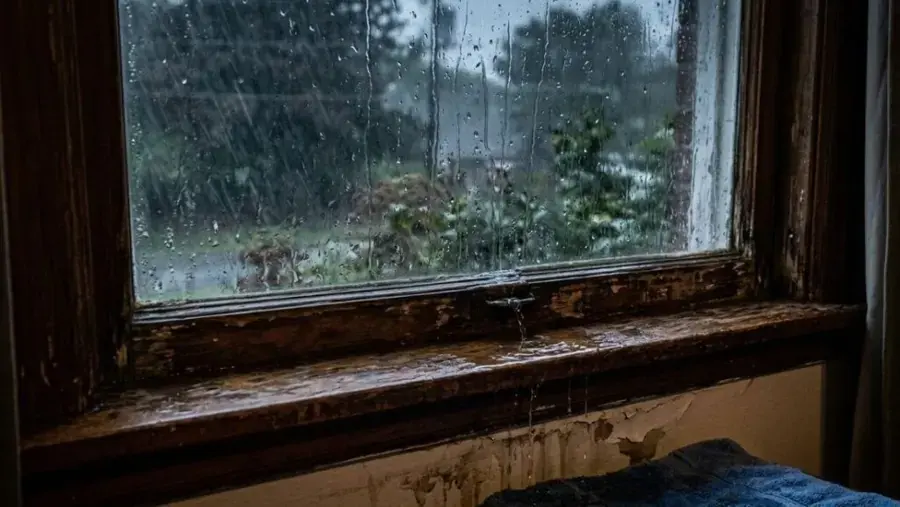
On May 16, 2025, a flash flood warning covered the West Chester, Coatesville and Downingtown area, and nearly 2 inches of rain fell in one hour. In West Chester, Gay Street was impassable, and Montgomery Avenue and Franklin Street ran like rivers.
Key takeaways
- A flash flood warning covered the West Chester area on May 16, 2025, with nearly 2 inches of rain in one hour.
- The borough's east side flooded, and officers and firefighters made about five water rescues.
- Street runoff carries mud and contaminants, so it is handled as Category 3 once it enters a building.
- Cleanup follows a set order: extraction, removal of soaked finishes, then structural drying.
- Chester County tells residents to enter an address in FEMA's Map Service Center to see whether a home is in a designated flood zone.
What happened on May 16, 2025
The warning covered the whole area, and the borough's east side flooded. The Goose Creek Alliance president put the rainfall at 1.89 inches in one hour.
In a single storm, the downpour showed its full range: water on roads, mud in the streets and storm drains that needed cleaning out afterward.
- Streets: Gay Street was impassable, and Montgomery Avenue and Franklin Street ran like rivers.
- Rescues: officers and firefighters made about five water rescues, including near South Franklin Street and East Miner Street.
- Cleanup: crews used bulldozers to scrape debris off mud caked streets and cleaned out storm drains.
Why one hour of rain does so much damage
Gutters and storm drains are built for ordinary rain. When nearly 2 inches falls in one hour, water leaves the drains and the street becomes the drain.
Total rainfall tells only part of the story. Speed decides whether drains keep up, and this much rain in one hour reaches the street faster than gutters and storm pipes can carry it away.
West Chester began a stormwater management program in 2003 and started a Stream Protection Fee in 2017 to pay for upkeep of aging storm sewers and flood mitigation. Programs like these keep the system working, but a cloudburst can still outrun any storm sewer.
What street water carries into a building
Once runoff crosses a threshold, it brings the street with it.
Mud and debris
Runoff collects soil, road grit, oil and whatever sits along the curb. When it reaches a doorway or a drain, all of that comes inside with it.
Fine silt also settles into carpet backing, wall bases and floor seams, where it holds moisture against the material. Silt left to dry hardens into a crust that is much harder to remove.
Why it counts as Category 3
Under the IICRC S500 standard, outdoor flood and runoff water is treated as Category 3. Porous materials it reached, such as carpet pad and lower drywall, are removed instead of dried.
Hard surfaces and framing that stay are cleaned with an EPA registered antimicrobial before drying begins. That sequence is the core of storm water damage cleanup in West Chester.
How water gets in during a cloudburst
Water finds the weakest point in a building, and a cloudburst tests all of them at once. Not every building has a basement, so the first walkthrough maps where the water entered and where it went.
The borough has 2,544 attached single family homes, and water in one house often shows up in the next, so the drying team checks both sides of a shared wall. These are the usual entry points:
- Doors and thresholds where street water rises above the sill.
- Window wells and basement stairwells, in homes that have them.
- Floor drains and sewer connections that back up when the storm sewer is full.
- Foundation walls and cracks that leak when the ground is saturated.
The first day after the water drops
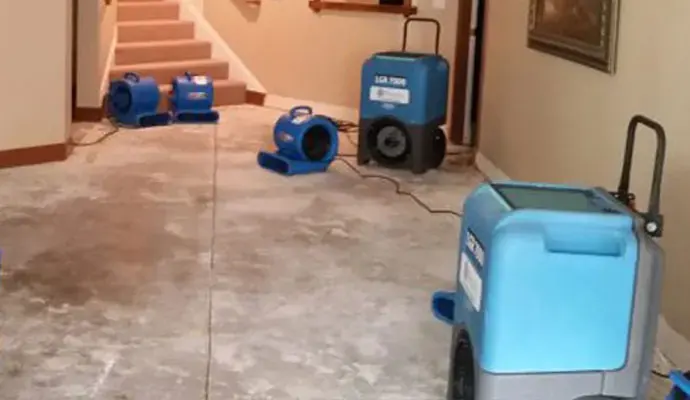
Cleanup follows a set order. Flood cleanup in West Chester starts with extraction, moves to removal of soaked finishes and ends with drying, and the crew doing water extraction in West Chester works truck mounted or portable extractors across floors and carpet.
The owner's part comes first, and it has two halves: the first steps, and sorting what got wet.
The owner's first steps
These come before any equipment is set up:
- Stay out of rooms with standing water until power to the area is off.
- Photograph the waterline, the mud and every damaged item.
- Move rugs, boxes and furniture to dry ground.
- Skip the household vacuum on wet floors.
- Ask for extraction before the mud dries, because dried silt is harder to remove.
Sorting wet belongings
Not everything that got wet is lost, and not everything that looks fine is safe to keep.
- Hard goods such as metal, glass and solid wood can usually be cleaned and kept.
- Carpet, pad, upholstery and particleboard that sat in runoff are usually discarded.
- Paper, cardboard and fabric that soaked up street water go in a separate pile for the adjuster to see.
- Food and medicine that touched floodwater are thrown out.
Flood maps, Goose Creek and Plum Run
Chester County's flood page tells residents to enter a property address in FEMA's Map Service Center to see whether a home is in a designated flood zone.
Developed areas in the Goose Creek floodplain are prone to flooding during heavy downpours. FEMA's Chester County flood study also says Plum Run presents flooding problems in the borough.
A map check answers the zone question. It does not say whether a given street flooded, so photos and notes from each storm are worth keeping.
A zone designation can also affect which insurance coverage is offered or required, which is one more reason to look it up before a storm rather than after. Water damage restoration in West Chester also covers the borough's other water risks, from sewer backups to frozen pipes.
Before the next downpour
A cloudburst gives little notice, so the useful steps are the ones taken on a dry day. None of them stops a flash flood, but each one shortens the cleanup after one.
- Clear gutters and extend downspouts so roof water leaves the foundation behind.
- Test a sump pump, in homes that have one, and check where it discharges.
- Keep valuables and documents above floor level in any room that has taken water before.
- Photograph each room while it is dry, so a later claim has a clear before picture.
- Know where the main water valve and the electrical panel are.
Questions
Does a flash flood warning mean water will enter homes?
No. A warning means flash flooding is happening or expected. Whether water enters a building depends on where it sits and how runoff reaches it.
Is storm runoff inside a building Category 3?
Yes. Outdoor flood and runoff water is treated as Category 3, which means more materials are removed than after a clean water leak.
How can a West Chester owner check a flood zone?
Enter the street address in FEMA's Map Service Center, as Chester County suggests. The result shows whether the property sits in a designated flood zone.
How soon should drying start after a cloudburst?
As soon as standing water is out and the space is safe. Wet material can grow mold in 24 to 48 hours.
What should be done with wet carpet after a cloudburst?
Carpet and pad that took in street runoff are usually removed. Silt and contaminants work into the backing, and pad cannot be cleaned.
Does homeowner insurance cover runoff flooding?
Policies differ. Surface water and rising water are commonly excluded, so ask the insurer what applies before cleanup starts.