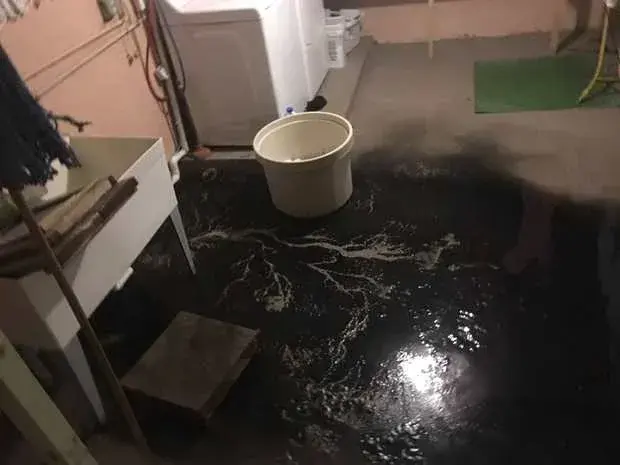
Pottstown's own explanation of a sewage backup is simple: when rain fills the sanitary pipes to capacity, the sewage has nowhere to go but back up into homes. Rain that enters through sump pumps, rain spouts and drains is part of the load.
Key takeaways
- The borough says that when rain fills the sanitary pipes to capacity, sewage can back up into homes or overload the treatment plant.
- Pottstown's storm water system is entirely separate from its sanitary sewer, so rain in the sanitary pipes is rain in the wrong place.
- The borough names sump pumps, rain spouts, cellar drains, yard drains and foundation drains as sources of inflow.
- Public Works offers a home inspection of where rain spouts and sump pumps connect.
- Sewage is Category 3, so cleanup removes porous material and sanitizes what stays.
How heavy rain turns into a backup
Pottstown runs two separate systems. Storm water drains through about 1,300 storm inlets and drainage pipe that discharge to the Manatawny Creek or the Schuylkill River.
Wastewater travels through the sanitary sewer to the treatment plant on Industrial Highway. The borough's Sewer Collection Division maintains that sewer pipe, which ranges from 6 inches to 36 inches across.
That separation is the whole design: rain belongs in the storm pipes, and only household wastewater belongs in the sanitary pipes.
The sanitary system also carries wastewater from West Pottsgrove Township and Upper Pottsgrove Township. When rain gets into it, the pipes can fill, and the borough says the sewage then has nowhere to go but back up into homes or overload the plant.
Where rainwater gets into the sanitary pipes
The borough's inflow and infiltration program exists to find clean water that should not be in the sanitary system. The water gets in by two routes, and each has its own list of causes.
Both routes matter, because the borough can only fix what it can find and an owner can only fix what sits on the property.
Inflow: rain through connections
Inflow is clean water entering through connections. The borough names these sources:
- Sump pumps: groundwater pumped into a sanitary connection adds to the flow.
- Rain spouts: roof water piped into the system fills it fast in a downpour.
- Cellar drains and yard drains: surface water finds its way into the pipe.
- Foundation drains: water collected around a foundation can be tied in.
- Cooling water discharges: steady flows that have no place in the sanitary system.
Infiltration: rain through cracks
Infiltration is a different problem. The borough lists cracked pipes, bad pipe joints and tree roots as sources, and it uses flow studies, smoke or dye testing and TV cameras to find them.
What a sump pump has to do with it
A sump pump moves water out of a low spot near a foundation. Where that pump discharges matters.
The borough asks residents to remove sump pumps and roof drains from the sanitary system. Public Works offers a home inspection of where rain spouts and sump pumps connect.
Homes differ in how they handle rain, so the inspection answers a question an owner cannot settle by guessing.
A pump that fails in the same storm can add clean water to the floor while sewage comes up, so the two problems can overlap. Sump pump failure cleanup in Pottstown deals with that overlap.
These are the questions worth asking at an inspection:
- Where does each rain spout discharge?
- Where does the sump pump discharge?
- Is any cellar drain, yard drain or foundation drain tied to the sanitary pipe?
The first day after sewage comes up
Sewage water carries bacteria, so the first steps protect people before they protect belongings:
- Stop using sinks, tubs, toilets and the washer so no more water goes down the drain.
- Keep people and pets out of the wet area.
- Do not rinse sewage into another drain, and do not run a household vacuum on it.
- Wear rubber boots, gloves and eye protection if entry is needed.
- Switch off power to the wet area only if the panel is dry and reachable.
- Photograph the water and each affected room before cleanup.
- Report the backup to the borough, since a full sanitary pipe can affect more than one house.
Tenants, owners and neighbors
The borough counts 10,689 housing units, and 50.7% of occupied units are renter occupied. A backup therefore often involves a tenant, an owner and sometimes a neighbor.
The tenant sees the water first. The owner controls the building's drains, spouts and pump connections.
A neighbor may be dealing with the same storm and the same full pipe.
Written notice, dated photos and a plain description of what was running when the water rose help each person show what happened.
What sewage cleanup removes and dries
The work splits into two stages, and the second cannot start until the first is finished. A plumber finds and clears the cause, and the cleanup crew handles what the water left behind.
Removal
Sewage water is Category 3, the most contaminated class under the IICRC S500 standard. Carpet, pad, insulation, lower drywall and anything porous that it touched are removed.
Contents get the same treatment. Hard items such as metal and plastic can be washed and sanitized, while upholstery, paper and cardboard that touched sewage are discarded.
The steps are the same ones used for sewage backup cleanup in Pottstown in any weather.
Cleaning and drying
Floors and framing that stay are washed and treated with an EPA registered antimicrobial.
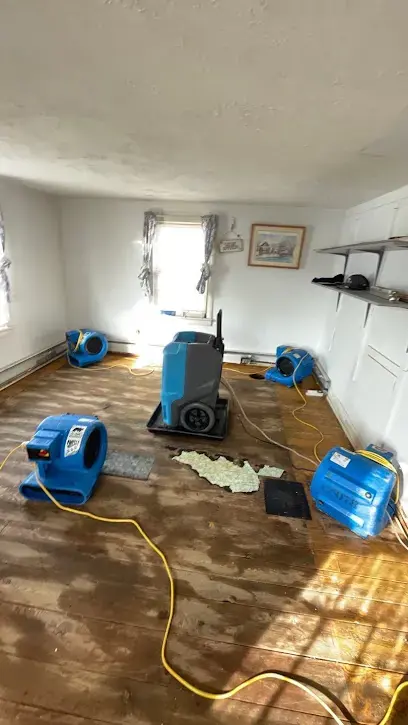
Then dehumidifiers and air movers dry the structure until readings match material the sewage never touched.
Drying takes longer than the cleaning, because a sanitized floor and the base of a wall still hold moisture from the backup.
Lowering the odds of a repeat
A few steps remove the part of the load that an owner controls. None of them replaces the borough's own repairs to cracked pipes and joints, but each one helps.
If a backup still happens, water damage restoration in Pottstown handles the cleanup and the drying.
- Ask Public Works about the connection inspection.
- Point gutters and rain spouts onto the ground away from the house, not into a drain.
- Test the sump pump and its power source before the rainy season.
- Keep the area around cellar and yard drains clear of leaves and debris.
- Know where the cleanout or backwater valve is, in homes that have one, and keep it accessible.
Questions
Is a sewage backup the same as a flooded basement?
No. A flooded basement may start as clean rain or groundwater. A sewage backup brings in Category 3 water from the sanitary pipes, so far more material is removed and sanitized.
Can a sump pump discharge into the sanitary sewer?
The borough asks residents to remove sump pumps and roof drains from the sanitary system, because clean water in those pipes can push sewage back into homes.
What is the difference between inflow and infiltration?
Inflow is rain entering through connections such as spouts and drains. Infiltration is water leaking in through cracked pipes, bad joints and tree roots.
Does homeowner insurance cover a sewage backup?
Coverage for sewer backup is often an added endorsement rather than part of a basic policy. Ask the insurer before a storm, not after.
How soon after a backup should cleanup start?
Right away. Porous materials absorb contaminated water, and mold can begin to grow within 24 to 48 hours.
Why does the borough offer a home inspection?
To find where rain spouts and sump pumps connect, so clean water can be kept out of the sanitary pipes.