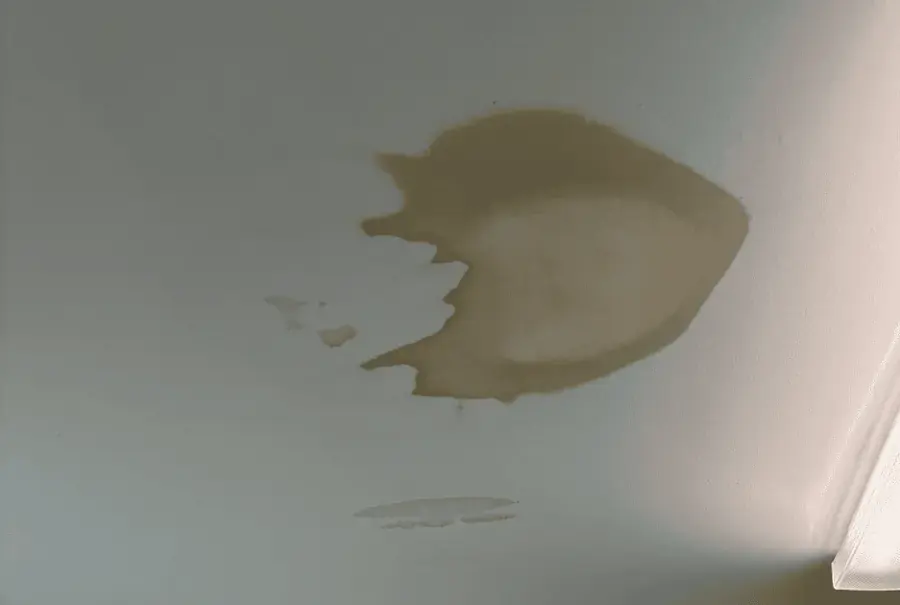
A brown stain spreading across a ceiling in Media often starts in someone else's home. About 58 percent of occupied homes in the borough are rented, and many share a floor or a ceiling with a neighbor.
Key takeaways
- In Media, 1,778 of 3,049 occupied homes are renter occupied, about 58 percent.
- About 1,779 housing units sit in buildings with two or more units, so water often crosses a ceiling or a wall.
- A ceiling stain is a symptom. The source can be a pipe, a drain, a tub or an appliance in the unit above.
- Wet ceilings can sag, and wet light fixtures can be a shock hazard, so the room below needs care.
- Tenants, landlords and building owners each document and insure a different piece of the loss.
How many Media homes share a ceiling
Media has 3,105 housing units. About 1,779 of them are in buildings with two or more units, about 1,292 are in buildings with five or more units and about 1,090 are in buildings with ten or more units.
That is a lot of shared floors. When a pipe, a washer or a tub fails above, the water follows gravity to the unit below.
Survey estimates of housing units by building size show how much is shared:
- Renter occupied homes: 1,778 of 3,049 occupied homes.
- Two unit homes: 187.
- Buildings with three or four units: 300 units.
- Buildings with five to nine units: 202 units.
- Buildings with ten to nineteen units: 383 units.
- Buildings with twenty to forty nine units: 356 units.
- Buildings with fifty or more units: 351 units.
Reading a ceiling stain
A stain records where water has been, not where it started. The pattern can still point toward the source.
A stain that grows after rain points toward the roof. A stain that grows when someone showers points toward a drain, and one that appears after a washer or dishwasher cycle points to that appliance.
A brown ring often means the ceiling has been wet before, so one stain can record more than one leak. The usual sources are:
- A supply pipe or a fitting in the unit above.
- A drain from a sink, tub or shower.
- An appliance such as a washer, dishwasher or ice maker.
- A roof or window leak on a top floor.
First steps for the tenant below
The tenant below sees the damage first and usually has the best photographs of how it started.
A ceiling that looks fine can still be wet above it. Drywall hides insulation and framing, so a small stain can mean a large wet area.
- Stay clear of a bulging ceiling, because it can fail without warning.
- Turn off power to the room if a light fixture is wet and the panel is safe to reach.
- Set out a bucket and move furniture and electronics away from the spot.
- Photograph the ceiling and write down the time.
- Tell the landlord or manager in writing, and ask that the unit above be checked.
First steps for the unit above and the owner
Speed matters more than blame. The longer the source runs, the more floors and walls the water reaches.
- Shut the valve to the fixture, or the whole unit's supply if the source is unclear.
- Stop using the appliance or fixture until it is repaired.
- Give the building manager, a plumber and the drying team access.
- Note what was running when the leak started.
How drying works between units
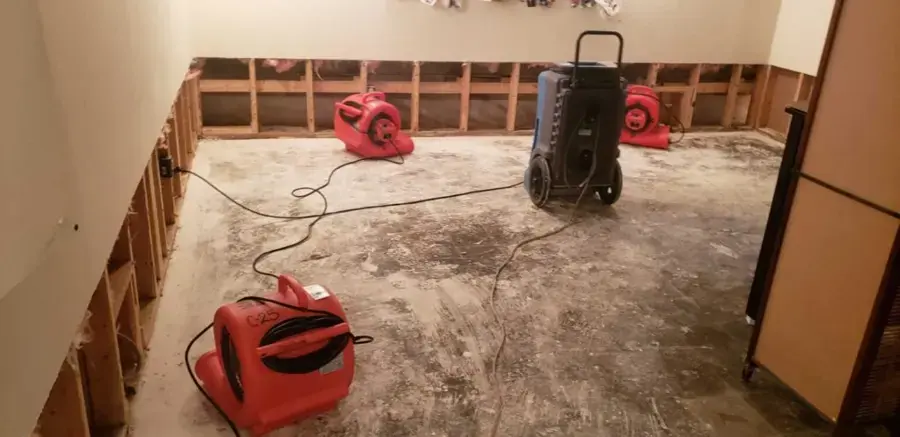
Water that leaves one unit rarely stays in one room, so drying covers the path the water took.
Ceilings and insulation
Drywall and insulation that stayed wet are removed. A small opening lets the drying team look into the cavity before deciding how much to take out.
That step is the same one used in ceiling leak water damage in Media when the source is a bathroom or pipe above.
Light fixtures and ceiling fans in the wet area stay off until an electrician checks them. A fixture holding water can fail even after the ceiling looks dry.
Walls and floors below
Water from above runs down wall cavities and into floors. The drying team measures each one, and dehumidifiers and air movers run in the lower unit and sometimes in the unit above.
Flooring gets the same checks. Vinyl, laminate and carpet over a wet subfloor can hide moisture that only readings find.
Media's housing runs from 861 units built in 1939 or earlier to 290 built in the 2010s, with a median build year of 1959, so the materials above and below a leak differ from one building to the next.
The unit above
The unit that started the leak often needs drying too: the subfloor, the cabinet bases and the wall behind the fixture. Drying only the unit below leaves the source area wet.
Appliance leak cleanup in Media handles the case where an appliance is the source.
Attached homes and townhouses
Not every shared wall is in an apartment building. Media also has 753 attached single family homes, where two houses share a party wall.
A leak in one house can move into the wall between them, and the neighbor may notice a stain or a damp smell before the owner does.
In that case the two owners usually coordinate directly. A quick conversation, then photos from both sides, helps the drying team find the whole wet area.
Each side of the party wall is measured, and the wall itself is opened only if the readings say it must be.
Who documents what
A lease often says who reports a leak and who handles building repairs. A renters policy usually covers belongings, and the building owner's policy covers the structure.
The details differ by policy.
If the building has a manager, a written report puts the leak on record and starts the repair. If it has none, the owner or the condo association is the contact.
Water damage restoration in Media fits the cleanup around those roles. Each side keeps its own file:
- Tenant: photos, a list of damaged belongings and the date the owner was told.
- Landlord or condo association: the source repair, the drying log and the building claim.
- Both: copies of every message about the leak.
Questions
Can a ceiling leak wait until the landlord fixes the pipe?
No. Wet drywall can sag, fixtures can become unsafe, and the water keeps spreading while repairs wait. Tell the owner right away and ask for access.
Does a renters policy cover damage from a neighbor's leak?
It often covers the tenant's belongings, but terms differ. Ask the insurer, and keep photos and a list of what was damaged.
Who calls the restoration team, the tenant or the landlord?
Either one can. The building owner usually controls access to the source, so the two should agree on who calls and who gives access.
How can a unit be dried when the source is in someone else's home?
The drying team needs access to both units. Without it, moisture in the wall or ceiling cavity can keep spreading after the lower unit looks dry.
How long does a leaking ceiling take to dry?
Wet drywall is usually replaced rather than dried, while framing and insulation are dried or replaced depending on readings. The schedule comes from the readings, not from a fixed number of days.
What if the leak came from the roof?
A top floor leak is a roof or window problem, and the owner arranges that repair. The drying team handles the interior water either way.