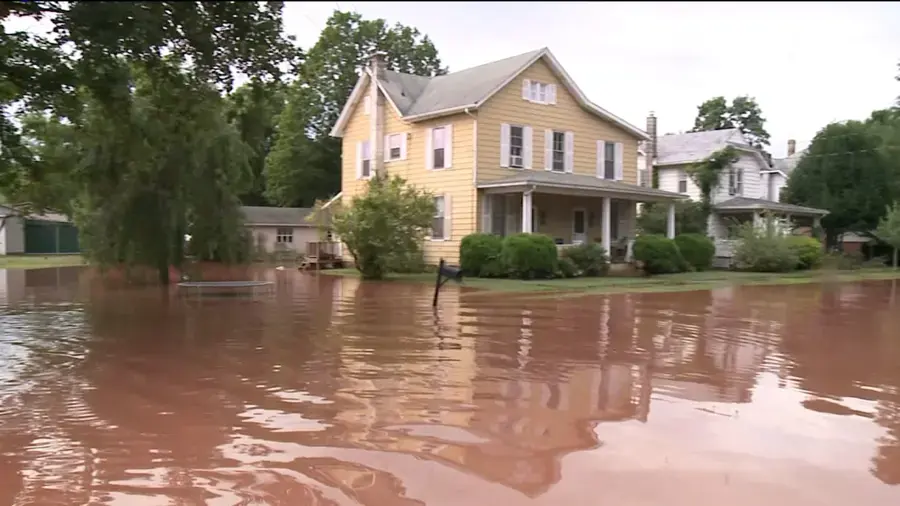
On September 1, 2021, the remnants of Ida dropped 10.10 inches of rain on Downingtown and sent the East Branch Brandywine Creek to a new record crest. Water that comes out of a creek is a different problem from water that comes out of a pipe, and the cleanup follows different rules.
Key takeaways
- Creek floodwater is handled as Category 3 from the start, so porous materials it touched are usually removed, not dried in place.
- Ida brought 10.10 inches of rain to Downingtown on September 1, 2021, closed Route 30 and flooded homes on Mary Street.
- The order is extraction first, then flood cuts and cleaning, then structural drying of the stone, block and framing that stay.
- Rising creek water is usually a flood insurance question, so photos of the waterline and a moisture log protect a claim.
- Rows and twins share walls, so a flooded home is worth checking on both sides of the party wall.
What Ida did to Downingtown
Downingtown sits where Beaver Creek empties into the East Branch Brandywine Creek. On September 1, 2021, 10.10 inches of rain fell at Downingtown as the remnants of Ida passed through.
The East Branch reached a new record crest that day. Route 30 closed, and homes on Mary Street flooded.
None of this was new to the borough. Two earlier floods set the benchmarks that Ida was measured against.
- 1942: The Brandywine flood of August 9 put about a third of the borough under water.
- 1999: Hurricane Floyd set the earlier record crest, 14.8 feet on the East Branch below Downingtown.
- 2021: Ida broke that record on September 1.
Why creek water is Category 3
Creek water collects silt, fuel, fertilizer, animal waste and overflow from drains on its way to a house. Under the IICRC S500 standard, that puts it in Category 3, the most contaminated class of water.
Clean water from a supply pipe can often be dried in place. Creek water cannot, because anything porous soaks up what the water carried.
That one classification is the foundation of flood cleanup in Downingtown. It decides what comes out, how it is cleaned and how long drying takes.
These are the materials that usually come out:
- Carpet and pad, which hold silt and bacteria.
- Drywall and insulation that the flood reached.
- Paneling, particleboard cabinets and other soft finishes.
- Stored cardboard, fabric and upholstery that sat on the floor.
The first day: safety and extraction
Two things come before any drying equipment: safety and standing water.
Before anyone goes in
Floodwater can hide live circuits, sharp debris and slick mud. Stay out of standing water until power to the area is off or the utility has confirmed it is safe.
Boots, gloves and eye protection come first, because Category 3 water carries bacteria.
- Keep children and pets out of the flooded rooms.
- Do not run a household vacuum or any electronics in a wet space.
- Photograph the waterline on every wall before anything is moved.
Getting the water out
The extraction crew pumps out standing water first, then pulls what remains from floors and low spots with truck mounted or portable extractors. That is the heart of water extraction in Downingtown.
Deep water in a basement is pumped down in stages. Emptying it too fast can push on the walls from the outside while the ground is still saturated.
Speed still matters, because silty water works deeper into masonry and wood the longer it sits.
Mud, flood cuts and cleaning
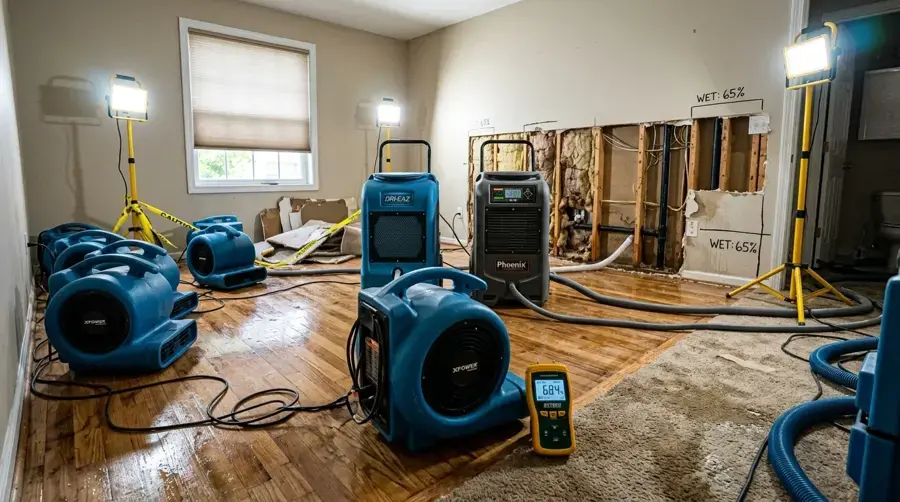
Once the water is out, the crew clears the silt by shovel and vacuum. Drywall the flood touched is cut above the visible waterline, so the new edge sits on clean material.
Studs and framing stay in place. They are cleaned, treated with an EPA registered antimicrobial and left open to dry, and HEPA air filtration runs where dust and odor are a concern.
A flooded basement adds one more step. The floor, the stairs and the base of the walls are washed before any drying equipment goes in, which is how basement flooding cleanup in Downingtown is sequenced.
In every room, the same three categories get sorted:
- Lower walls: cut above the waterline and removed.
- Floors: carpet and pad out, hard floors cleaned and checked from below.
- Contents: wet items sorted into what is cleaned and what is discarded.
Drying stone, block and brick
Drying is where creek flood jobs run longest, because the structure holds more water than the finishes did.
Stone and block walls
Many Downingtown homes stand on fieldstone and block foundations. Those walls take in water and give it up slowly, so they dry longer than framing does.
A wall that looks dry on the surface can still hold water inside. Readings taken at several depths show whether the moisture is leaving or sitting.
Dehumidifiers and air movers run until the readings match material the flood never reached. Structural drying ends on readings, not on a date.
Mold can start within 24 to 48 hours in wet material, which is why drying begins as soon as the water is out.
Rows and twins
Rows and twins are the most common housing in the borough, and a party wall belongs to both houses.
The drying team checks the neighbor's side too, because moisture can cross a shared wall in either direction.
Records and insurance
Standard homeowner policies often exclude rising creek water, which is why separate flood coverage, such as a policy through the National Flood Insurance Program, matters. Policies differ, so ask the insurer which events are covered.
The claim file is stronger when the order of events is clear: when the creek rose, when water entered, when it was extracted and when each reading came back dry. These records are worth gathering:
- Record the date and time the water entered and when it was pumped out.
- Keep receipts for pumps, dumpsters and hotel stays.
- Save a sample of damaged materials until the adjuster has seen them.
- Ask the drying team for the moisture readings from each visit.
Before the next high water
A flood plan costs little before a storm and a great deal after one. When heavy rain is forecast for the East Branch or Beaver Creek, a few steps make the next high water easier to handle.
- Move valuables, documents and electronics to a higher floor.
- Photograph each room, the water heater, the furnace and the electrical panel while everything is dry.
- Find the main water valve and the electrical panel, and note whether the panel sits low.
- Keep the insurer's claim contact and the contact for water damage restoration in Downingtown where the whole household can find them.
- Check FEMA's online flood maps for the address, and remember that a property outside a mapped zone can still flood.
Questions
Is creek floodwater different from a burst pipe?
Yes. Pipe water starts clean, while creek water carries silt and contaminants. That is why creek water is handled as Category 3 and more materials are removed.
How long does a flooded Downingtown basement take to dry?
Drying runs until the readings match dry material, and stone or block walls usually take longer than framing. Readings decide when the equipment comes out, not the calendar.
Does homeowner insurance cover creek flooding?
Often not. Rising water is commonly excluded and needs separate flood insurance. Read the policy wording or ask the insurer before filing.
Can carpet be saved after creek water?
Usually not. Silt and bacteria work into the backing and pad, so carpet touched by Category 3 water is generally removed.
What should be thrown away after a creek flood?
Anything porous that the water reached: carpet, pad, insulation, particleboard and stored paper. Hard items such as metal and solid wood can often be cleaned and kept.
What if the neighbor's side of a shared wall is wet?
The drying team measures both sides of the party wall. Moisture that crosses it can keep the wall wet even after one house is dry.