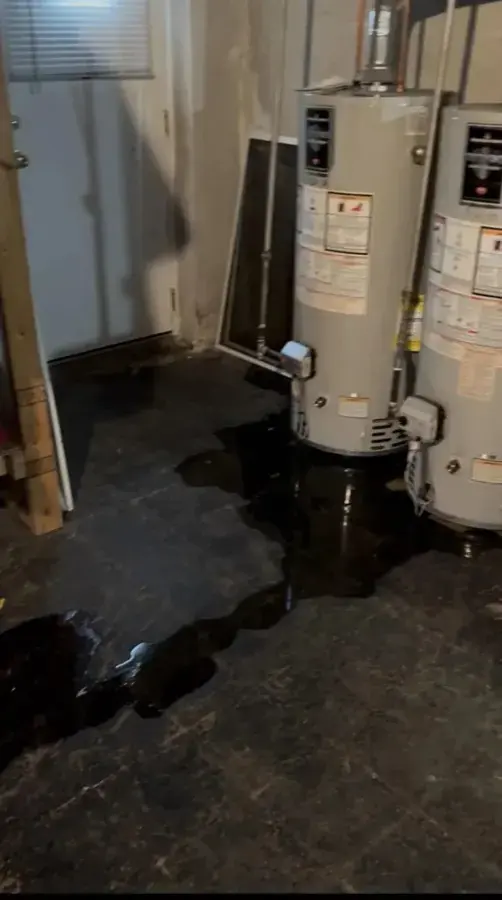
Water heaters and washers in basements are two of the ways plumbing fails in Downingtown homes. When one lets go, the water heads for the lowest floor and the walls around it.
Key takeaways
- Water heaters and washers in basements are two of the ways plumbing fails in Downingtown homes, and both put water on the lowest floor first.
- Shut off the water to the failed appliance first, then the power or gas to a water heater, but only when the area is dry and safe to enter.
- A tank that leaks from its body is replaced, while a washer hose or valve is a quick plumbing fix. Neither repair removes the water already spread.
- Stone and block basements and finished basements dry differently, so the plan depends on what the water touched.
- Keep the failed hose or part, photograph the scene and write down the dates.
Why basements take the hit
Both appliances hold or move a lot of water under pressure, and both stand on the floor where every other leak in the house also ends up.
Stone, brick and frame homes in the borough sit on fieldstone and block foundations. The postwar to 2000s subdivisions in the townships added finished basements with carpet, drywall and storage.
The same leak does different damage in each. On a bare floor it is a puddle that heads for a drain.
In a finished room it is wet carpet pad, wet drywall and soaked boxes.
Floor drains and sump pits help, but only when the water finds them. On a level floor, water spreads in every direction before it heads for a drain.
How a water heater fails
A steel tank rusts from the inside. The leak usually starts as a weep at a seam, a fitting or the base, and it grows over time.
The fuel matters too. An electric tank has heating elements and wiring, so a leak near them is an electrical hazard as well as a water problem.
A gas tank has a burner and a vent, and a wet burner needs a plumber's check before it is relit.
These are the signs worth acting on, and each one is a reason to call for water heater leak cleanup in Downingtown before the weep becomes a flood:
- Rust streaks on the tank, the fittings or the pipes above.
- A damp patch or a ring of mineral crust on the floor.
- Dripping from the relief valve pipe.
- Rumbling or popping while the tank heats.
How a washer fails
A washer can fail in two different ways, and each leaves a different kind of water behind.
Supply hoses and valves
The two hoses behind a washer stay under pressure around the clock, even when the machine is off.
A bulge, a crack or a loose fitting can spray or seep for hours before anyone sees it.
- Look for bulges, cracks or rust at the hose ends.
- Replace old rubber hoses before they fail.
- Close both valves when the house will be empty.
Drain and overflow
A clogged standpipe or a failed drain pump sends soapy gray water over the top or onto the floor.
Gray water is not clean water, so it is handled with more care than a supply leak. That is the difference between a simple washer and appliance leak cleanup and one that needs extra sanitizing.
The first steps when the floor is wet
Start with the supply. Close the valve to the heater or the washer, or the main valve if the appliance valve is stuck.
Then work through the rest in order:
- Electric heater: switch off power at the panel only if the panel is dry and reachable without stepping in water.
- Gas heater: turn the gas control to off if it is safe to approach. If gas can be smelled, leave and call the gas utility.
- Standing water: stay out of it near outlets, extension cords and the washer itself.
- Belongings: move boxes, rugs and furniture off the wet floor.
- Evidence: photograph the appliance, the water and the floor before mopping.
Cleanup in a stone, block or finished basement
What the crew does depends on what the water reached.
Unfinished stone and block basements
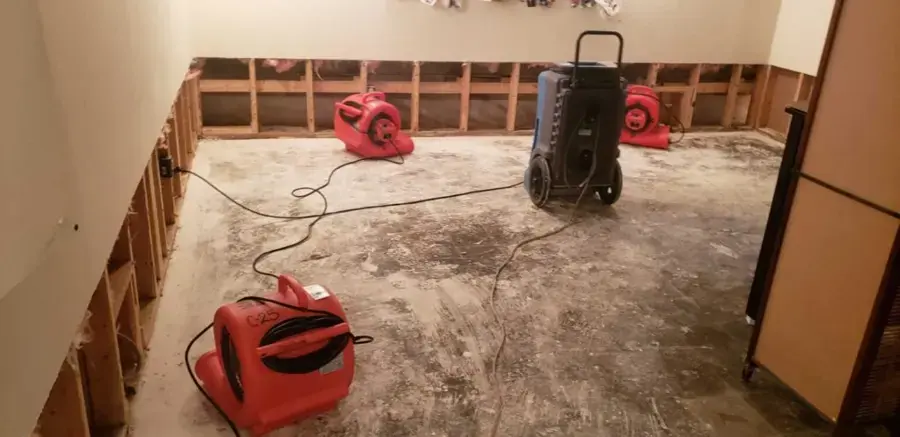
On a bare floor, the crew doing water extraction in Downingtown pulls the water out and the drying team measures the walls.
A concrete floor dries faster than the walls around it. The drying team pulls moisture from the base of the wall, where stone or block meets the slab, because that is where water lingers.
Stone and block hold moisture, so air movers and dehumidifiers run until the readings settle. Stored cardboard and fabric come out early.
Finished basements
Carpet pad, lower drywall and insulation that stay wet usually come out, because they trap water against the framing.
Washer water carries soap and lint, so the surfaces that stay are cleaned before drying equipment goes in. Behind baseboards, the base of the wall is checked for hidden moisture.
The same order applies in any basement flooding cleanup.
Replacement, records and the claim
A tank that leaks from its body cannot be patched. A plumber replaces it, and the water that already got out is a separate job for the restoration team.
Once the leak is stopped, the repair and the drying can be scheduled side by side. The restoration team keeps drying while the plumber works.
Insurers often ask whether a leak was sudden or slow. Dates, photos and the failed part all help answer that.
A water bill that jumps without explanation can be the first sign of a slow leak, so it is worth comparing recent bills after any repair.
- Note when the leak was found and when the water was shut off.
- Keep the failed hose, valve or tank fitting.
- Save the plumber's invoice and the cleanup invoice.
Prevention that works
Most of these failures can be caught early. A short check a couple of times a year costs far less than a flooded floor.
- Look at the tank, the fittings and the relief valve pipe for rust, drips and mineral crust.
- Swap old rubber washer hoses for braided stainless steel hoses.
- Set a water alarm on the floor beside the heater and behind the washer.
- Test the shutoff valves so they turn when they are needed.
- Keep belongings on shelves rather than on the floor of a basement that has a heater or a washer.
- Consider an automatic shutoff valve that closes when a sensor gets wet.
Questions
Can a leaking water heater be repaired?
A leak from the tank body means the tank has failed, and it is replaced. A leak at a fitting or a relief valve may be repaired by a plumber.
How far can washer water travel?
Across the whole floor and into any gap it finds, such as the base of a wall or a crack in the slab. Water keeps spreading until it reaches a drain, a low spot or something porous.
Is washer water clean?
A supply hose leak starts as clean water. A drain or overflow leak is gray water. Either one gets worse the longer it sits.
Does a drain pan stop a water heater flood?
A pan with a drain pipe catches small leaks early, but it cannot hold a full tank failure. Water that overflows the pan still reaches the floor.
What if the leak happened while nobody was home?
Shut the water off at the main, photograph everything and start extraction promptly. A long leak soaks deeper, so the drying plan is larger.
How often should a water heater be checked?
A look at the tank, the relief valve and the fittings a couple of times a year catches early signs. A plumber can advise on flushing and on how old a tank is.